
Before you budget a commercial remodel in West Des Moines, find out what you might not have to pay. The city runs property improvement funding and tax rebate programs targeted at Valley Junction, the 8th Street corridor, and designated urban renewal areas. Separately, a contributing building in the Valley Junction historic district can qualify for a 20 percent federal rehabilitation tax credit and a state credit of up to 25 percent, and accessibility work carries its own federal credit and deduction. Which of those apply depends on where you are and what you own, and that same answer drives your approval path. Establish it before design, because several of these programs cannot be applied retroactively.
Key Takeaways
- West Des Moines offers property improvement funding and tax rebate programs by geography, and most business owners budget a remodel without ever checking whether they qualify.
- The Valley Junction commercial core is a National Register historic district, with 53 properties identified by the city as contributing historic buildings as of 2025.
- A certified rehabilitation of a contributing building can draw a 20 percent federal tax credit and a state credit of up to 25 percent of qualified rehabilitation expenditures, and Iowa encourages using both.
- Those credits require the work to meet the Secretary of the Interior’s Standards and require applications filed before construction, so they shape design rather than reimburse it afterward.
- Accessibility work carries a separate federal credit of up to $5,000 a year for small businesses plus a deduction of up to $15,000, and neither applies to new construction.
West Des Moines is not one commercial market. It is an 1890s railroad town with a National Register historic district at one end and business parks and regional retail at the other, and the difference is not cosmetic. It determines who approves your drawings, what the building behind the drywall is actually made of, and how much public money is sitting on the table.
Most remodeling advice skips all of that and goes to finishes. Finishes are the last decision, not the first.
Which West Des Moines are you remodeling in?
Three broad situations. Know which one you are in before spending anything on design.
A storefront in Historic Valley Junction. Mostly late 1800s and early 1900s masonry along Fifth Street and the cross streets. Design guidance applies, city funding is aimed here, historic rehabilitation credits are available on contributing buildings, and the construction realities are nothing like a building put up after 1980. This is where the money and the constraints both live.
A suite in a corridor retail or mixed-use building. Newer construction, almost always leased. Your landlord’s written approval and the size of your improvement allowance will shape this project more than the city will, and the allowance is usually paid as reimbursement after completion rather than as money up front. Check your lease for the restoration clause too, which can turn a wall you paid for into a future liability. We go through lease terms, allowances, and phasing in our guide to commercial remodeling as a tenant.
An office suite in a business park. Usually the simplest path. Newer shell, mechanical and electrical already stubbed, a property manager rather than an individual landlord, no historic overlay, and no funding programs. The variables here are use classification and whether moving walls pulls sprinkler heads and fire alarm devices into scope.
What does it cost, and what might you not pay?
We publish cost bands for kitchens, bathrooms, and basements because those projects resemble each other enough for a range to be useful. We do not publish one for commercial, and anyone quoting you a per square foot number before seeing your space is guessing.
Three questions place you, and you can answer all three today. Are you changing what the space is used for, which brings occupant load, exiting, restroom counts, and often fire protection with it? Are you moving or adding walls, which changes sprinkler and fire alarm layout? Is the shell already conditioned with mechanical, electrical, and plumbing stubbed roughly where you need them? Every yes moves you up a tier.
Here is the part specific to West Des Moines. The gross construction number and what the project actually costs you can be meaningfully different here, and more different than anywhere else in the metro. That gap is what the next three sections are about.
Will the city help pay for it?
Possibly, and this is the question we most often find nobody asked.
West Des Moines publishes business financing programs tied to specific geographies. Valley Junction is identified as eligible for property improvement and regulatory compliance funds. The 8th Street corridor has targeted commercial renovation support. City-wide urban renewal areas allow a property tax rebate aimed at vacant or underutilized buildings. And the city notes that projects involving National Historic District buildings may qualify for a ten-year rebate.
The work these programs target is the work a commercial remodel involves: repairing facades, masonry, windows, doors, and awnings, renovating upper floors, making safety and structural upgrades, and professional exterior cleaning. The city’s stated conditions include obtaining all required permits and maintaining the building’s historical integrity, which reads as a sequencing instruction. Permit first.
Two cautions. Program terms, eligibility maps, and available dollars change, sometimes annually, so treat all of the above as a reason to call rather than a promise. And these are city programs administered by the city, not something a contractor applies for on your behalf. Talk to West Des Moines Community and Economic Development early, because a program requiring approval before work begins is worth nothing to you after demolition starts.
What changes in Historic Valley Junction?
The commercial core of Valley Junction is listed on the National Register of Historic Places, and the city identifies 53 properties in the district as contributing historic buildings as of 2025. That designation is the source of the funding above, the tax credits below, and the design expectations in between.
On design, the situation is in motion and worth stating accurately. The Historic West Des Moines Design Guidelines were adopted by City Council in February 2022 for the mixed-use commercial district centered on Fifth Street, and they function as recommendations rather than binding requirements. The city has since discussed publicly that making them mandatory would require amending the zoning ordinance rather than rewording the guidelines, and has floated a regulatory approach specific to the Historic Valley Junction Business District. No such change has been adopted. Guidance you can currently treat as advisory may not stay advisory, so if your project touches the exterior, talk to Development Services before you design.
On construction, an 1890s or early 1900s commercial building brings conditions no drawing set warns you about. Load-bearing masonry means a wall you assumed was a partition may not be. Many of these buildings have no sprinkler system, and adding occupant load or changing use can trigger one, which is a scope of its own. Upper floors sit underused precisely because the stair, the egress, and the accessible route were never resolved. Existing conditions frequently include decades-old work done without permits. And the accessible entrance problem is genuinely harder here, because a raised storefront floor meeting a narrow sidewalk leaves few options for a compliant route.
None of that makes a Valley Junction building a bad project. These are among the best commercial spaces in the metro. It means discovery happens before the budget is fixed, not after.
Which tax credits apply to this work?
Two separate systems, and they answer to different situations.
Historic rehabilitation credits, if you own a contributing building
This is the largest number in this post by a wide margin. A certified rehabilitation of a building listed on the National Register, or certified as contributing to a registered historic district, can earn a 20 percent federal tax credit on qualified rehabilitation expenditures. Iowa layers a state credit of up to 25 percent on the same qualified expenditures, and the state’s own guidance encourages using the programs together. Iowa’s credit is refundable.
The conditions are real and they are not paperwork you handle at the end.
- The work has to meet the Secretary of the Interior’s Standards for Rehabilitation, which constrains storefronts, windows, and materials in ways that shape design decisions rather than just documenting them.
- Applications run in parts through the State Historic Preservation Office and, federally, the National Park Service, and the early parts are filed before construction. Starting work first can disqualify the project.
- Iowa sets a minimum for commercial buildings of $50,000 in qualified rehabilitation expenditures, or 50 percent of assessed value excluding land, whichever is less.
- The eligible taxpayer is the fee simple owner or a long-term lessee meeting the federal requirements, so a tenant on an ordinary five-year lease is usually not the claimant.
- The federal credit requires the building be income-producing, and the state program is capped and competitive rather than automatic.
Honest scale note: these programs are used most often on full building rehabilitations, not tenant fit-outs. If you own a Valley Junction building and are doing substantial work, this changes the arithmetic of the whole project and belongs in the conversation before anything is drawn. If you are a tenant refreshing a suite, it probably is not yours to claim.
Accessibility incentives, for almost anyone
The federal government offers two incentives for accessibility improvements that can be used together in the same tax year. The Disabled Access Credit under Section 44 goes to businesses with gross receipts of $1 million or less in the prior year, or 30 or fewer full-time employees, and covers half of eligible access expenditures above $250 and up to $10,250, for a maximum credit of $5,000. The barrier removal deduction under Section 190 is open to businesses of any size, up to $15,000 per year. Neither applies to new construction, which is exactly why they matter on an older building.
We are remodelers, not accountants, and nothing above is tax advice. Bring all of it to your CPA before the work is scoped, because how a project is documented and phased affects what qualifies.
What about permits and staying open?
Commercial work is permitted through the city’s Development Services department, and commercial plan review runs longer than residential. Exterior changes, signage, parking, and any change in how the building is used can pull you into planning or zoning review on a separate track from the building permit, which adds calendar time rather than just a fee. Electrical, plumbing, and mechanical are pulled by contractors licensed in those trades. And the day construction finishes is not the day you open. A final inspection and, on a change of use or a new tenant space, a certificate of occupancy sit between the two, so set your opening date behind that sign-off.
Most commercial work can be phased or run after hours, with temporary partitions, dust control, and a separate path for crews. Exit paths cannot be blocked or narrowed during business hours, even briefly. We cover phasing, ADA path-of-travel obligations, and how to compare commercial bids in the tenant-side commercial guide.
Working with Elk River Contracting in West Des Moines
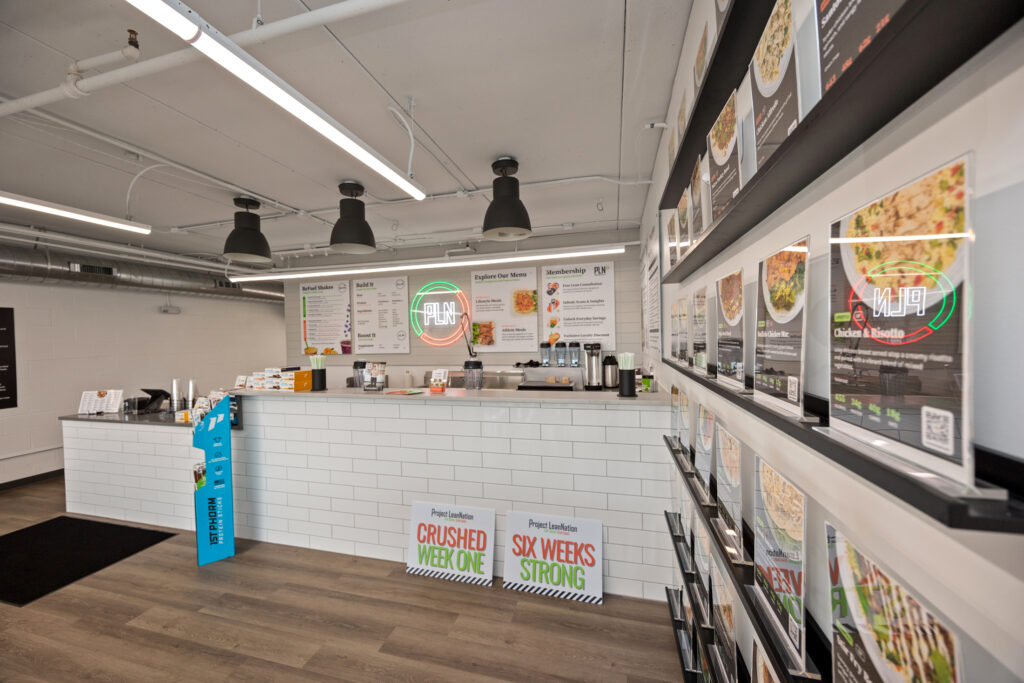
Cole and Marquel Stuedemann founded Elk River Contracting in Ankeny in 2022, with backgrounds in major commercial construction and the Bakken oil fields, which is where the scheduling discipline on this work comes from. On a commercial job the thing that goes wrong is almost never craftsmanship. It is an approval nobody sequenced, a sprinkler revision nobody priced, or a credit application nobody filed before demolition started. We pull the permits, coordinate the inspections, and run the phasing so the business keeps operating. Registered Iowa contractor, license C144441, general liability and workers’ compensation with certificates shared before any contract is signed, and a one-year workmanship warranty in writing. Our West Des Moines work includes Project Lean Nation and an office built-ins project, and the commercial projects page covers our full scope.
Frequently Asked Questions
Do the Valley Junction design guidelines apply to interior work?
The 2022 guidelines address architectural and streetscape design for the mixed-use commercial district, which is fundamentally about the exterior and the public realm. Interior work is governed by building code and permits like anywhere else. That said, if your interior project changes the storefront, the entrance, or signage, you are touching what they do address. Ask Development Services where the line falls for your scope.
We are tenants, not owners. Can we use the historic tax credits?
Usually not. The eligible taxpayer is the building’s fee simple owner or a long-term lessee meeting the federal rehabilitation credit requirements, which an ordinary commercial lease does not. It is worth raising with your landlord, though, since a project that qualifies changes their economics and can become a reason to negotiate a larger improvement allowance or a longer term.
Our building has no sprinkler system. Does a remodel require one?
Sometimes, and it depends on what you are changing rather than the building’s age. Increasing occupant load, changing use classification, or the extent of the alteration can all bring sprinklers into scope. Take this to the fire marshal and plan review at the concept stage, because retrofitting sprinklers into old masonry is a large enough number to decide whether a project happens.
Is it cheaper to remodel a newer suite than an old Valley Junction building?
On the construction number alone, usually. But that comparison ignores the city funding aimed at the district, the historic rehabilitation credits available to owners of contributing buildings, and the accessibility incentives that only apply to existing buildings. Run both sides on net cost before assuming the newer space wins.
Where to start
Three calls, none of which cost anything. Call West Des Moines Community and Economic Development and ask what your address qualifies for. Call Development Services and ask whether your scope touches design review or a change of use. Call your CPA about the historic and accessibility credits, and do it before anything is drawn, because the applications that matter most get filed before construction.
Then we can have a real conversation about scope and number. We work throughout West Des Moines and the metro on commercial and residential projects both. Get in touch and we will walk your space and tell you what we see, including the parts that cost money.